
Nature Notes
Life in the Woods, Season by Season
What’s growing, singing and scurrying at Blacknest right now - and how you can join in.
🌈 In Anne’s Words
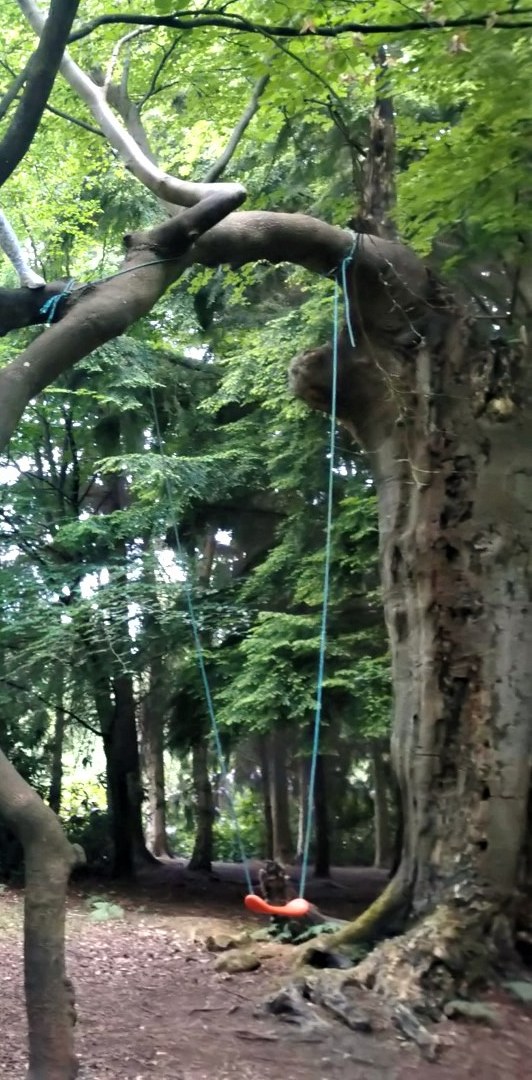
These woods have been in my family since the 1960s, and I still can’t walk through them without stopping. A wren scolding from the brambles, a new fungus pushing up through the leaves, the first newt in the pond - there’s always something new to notice, and I never tire of it.
Over the years I’ve learnt how to help this woodland thrive - planting trees and hedges, digging a new pond, and listening to the birdsong grow louder each spring. The children are a huge part of that. They help me rewild, they spot things I’d have walked straight past, and they go home genuinely proud of what they’ve achieved.
That’s what I want Forest School to be - not a lesson about nature, but the chance to get stuck in, to build, explore, ask questions and find the answers for themselves. Learning through play is where a love of the natural world begins, and a child who loves the woods will grow up wanting to look after them.
We’re a family here, and every child who comes becomes part of it. Many return year after year, and it’s a joy to watch them grow up alongside the woods - the little ones who once needed a hand across the log bridge become the confident regulars showing newcomers the ropes.
“Education is not a matter of getting facts and sewing them within brains, it is an attitude of mind that you teach children to find out for themselves.”David Attenborough
Come and find your own favourite corner of the woods!!
AnneLevel 3 Forest School Leader
Read Anne’s latest note from the woods (Spring 2026)
Biodiversity is visibly on the rise here - wildflowers are flourishing, drawing in more insects, and that means more food for the birds this rich, varied habitat already suits so well. There’s more birdsong than ever before too - Chiffchaff and Firecrest, Green Woodpeckers and Treecreepers are all evident.
My special delight this spring is seeing last year’s tree and hedge planting come into leaf, forming clusters of undergrowth where before there was nothing.
This Season in the Woods
Every season brings something new to Blacknest. Here’s what to look and listen out for right now - or tap another season to see what’s coming.
The Bumblebee
- Queen bumblebees are the first to wake, often on sunny days in March, hungry after sleeping through the winter.
- Each queen starts a brand-new nest all on her own, often in an old mouse hole.
- A bumblebee’s fuzzy coat helps it carry pollen from flower to flower.
- There are around 24 different kinds of bumblebee in the UK.
What to look and listen out for
- Listen for the chiffchaff, singing its own name from the treetops (hear it)
- Frogspawn and newts in the pond
- The azaleas and rhododendrons bursting into pink
- Woodpeckers drumming on hollow branches (hear it)
- Last year’s new trees and hedges coming into leaf
- Wildflowers pushing up through the leaf litter
Most likely on the tally right now
The Stag Beetle

- Stag beetles fly on warm summer evenings, with a loud, clumsy buzz.
- The adults only live for a few weeks, but they spend years growing up as grubs inside rotting wood.
- That’s why we leave log piles and dead wood around the woods for them.
- Only the males have the giant ‘antlers’ - the females have small, strong jaws for digging.
What to look and listen out for
- Butterflies sunbathing on the brambles
- Dragonflies and damselflies darting over the pond
- Grasshoppers chirping in the long grass of the glade
- Ladybirds hunting greenfly on the nettles
- Young birds begging noisily for food
Most likely on the tally right now
The Badger

- Badgers live in family groups in underground setts, and some setts have been used for hundreds of years.
- A badger can eat several hundred earthworms in a single night.
- Autumn is feasting time, as badgers fatten up for the colder months ahead.
- Their black-and-white face stripes may help them recognise each other in the dark.
What to look and listen out for
- Fungi of every shape and size - we’ve found over 60 kinds here so far
- Squirrels and jays busily burying acorns
- Conkers and sweet chestnuts underfoot
- Tawny owls calling as the evenings draw in (hear it)
- Leaves turning gold, red and copper
Most likely on the tally right now
The Tawny Owl

- Tawny owls pair up for life and stay in the same patch of woodland year after year.
- Soft, fringed feathers let them fly almost silently.
- They swallow small prey whole, then cough up neat ‘pellets’ of fur and bone.
- Winter is when they’re at their noisiest, calling to guard their territory.
What to look and listen out for
- Frost patterns on leaves and spiders’ webs
- Animal tracks in the frost and mud - can you tell a fox from a deer?
- Robins singing their thin, silvery winter song (hear it)
- Bare branches showing off last summer’s nests
- Foxes calling on cold, still nights
Most likely on the tally right now
Wild Woodland Tally
Spotted one of our woodland neighbours? Add it to the board! Each sighting adds one chalk mark, whether it’s a robin or a rare beetle. The board is wiped clean at the start of every season (1 March, 1 June, 1 September and 1 December), so each season’s tally starts again from zero.
This season so far, since 1 September 2026
Our Regulars

Robin
Our boldest bird. Robins often hop right up close while we’re digging, hoping we’ll turn up a worm.
Fun fact: Robins sing all year round, even in the depths of winter, and the females sing too.

Grey Squirrel
Busy, bouncy and always up to something - usually burying acorns or racing along the branches.
Fun fact: Squirrels bury thousands of nuts each autumn and forget plenty of them, so they plant lots of new trees by accident.

Fox
Shy, but often about at dawn and dusk. Look for neat footprints in the mud and a musky smell on the path.
Fun fact: Foxes have whiskers on their legs as well as their faces, to help them feel their way in the dark.
Badger
Our night-time neighbours. You’re more likely to spot their paths, scratching posts and dug-up earth than the badgers themselves.
Fun fact: Badgers are very house-proud. They regularly drag out old bedding and bring in fresh grass and leaves.

Muntjac Deer
A small, shy deer, about the size of a dog, that slips quietly between the bushes.
Fun fact: Muntjac are sometimes called barking deer, because their alarm call sounds just like a dog’s bark.

Rabbit
Most often seen at the woodland edge, nibbling the grass, with a white tail bobbing as they dash for cover.
Fun fact: A rabbit’s front teeth never stop growing. All that nibbling keeps them just the right length.

Red Kite
Look up! A big, reddish bird of prey with a forked tail, often circling slowly overhead.
Fun fact: Red kites had vanished from England, until they were brought back in the 1990s. Now they’re a regular sight over our woods.

Great Spotted Woodpecker
Black and white with a flash of red. Listen for its drumming echoing through the trees in spring.
Fun fact: A woodpecker can drum on a tree more than ten times a second, with a specially strong skull to cushion every blow.
Tawny Owl
The voice of the woods at dusk. Tawny owls are heard far more often than they’re seen.
Fun fact: That famous ‘twit-twoo’ is really two owls chatting. One calls ‘ke-wick’ and the other answers ‘hoo-hoo’.
Bumblebee
Big, fuzzy and gentle, bumblebees bumble from flower to flower from early spring right through to autumn.
Fun fact: Bumblebees can fly on chilly days by shivering their flight muscles to warm themselves up.

Peacock Butterfly
One of the first butterflies of spring, often spotted sunbathing with its wings spread wide.
Fun fact: Those big ‘eyes’ on its wings are there to startle hungry birds, and it can even hiss by rubbing its wings together.

Ladybird
Shiny, red and spotty, ladybirds trundle along leaves and stems on the hunt for greenfly.
Fun fact: One ladybird can munch through thousands of greenfly in its lifetime - a gardener’s best friend.
Rare Stars
Stag Beetle
The UK’s biggest beetle, and a real treasure. Our log piles give their young a home.
Fun fact: The males’ giant ‘antlers’ are actually jaws, used for wrestling rivals. Their young can live inside rotting wood for up to six years.

Great Crested Newt
A protected pond-dweller with a dragon-like crest. Spotting one in our new pond would be a very special moment.
Fun fact: Great crested newts are protected by law. In spring, the males grow a wavy crest along their backs to impress the females.
Legendary Spot

Violet Click Beetle
One of the rarest beetles in Britain, found in only a handful of ancient woodlands, including nearby Windsor Forest.
Fun fact: It lives deep inside the hollow trunks of very old trees, so hardly anyone has ever seen one. Spot one and you’re a legend!
You can add up to 20 of each regular a day, and one of each rare star or legendary spot. Rare finds are very special - please only add them if you’re sure!
About our chalk drawings
Our drawings are based on photos shared on Wikimedia Commons, with thanks to the photographers. Robin: photo by Julian Herzog (CC BY 4.0); Grey Squirrel: photo by Tom Friedel (CC BY 3.0); Fox: photo by Marie Hale (CC BY 2.0); Badger: photo by caroline legg (CC BY 2.0); Muntjac Deer: photo by 葉子 (CC0); Rabbit: photo by Yannic Matt Photography (CC BY 4.0); Red Kite: photo by TRinaud (CC BY 4.0); Great Spotted Woodpecker: photo by Ron Knight from Seaford, East Sussex, United Kingdom (CC BY 2.0); Tawny Owl: photo by Michael Gäbler (CC BY 3.0); Bumblebee: photo by Arnstein Staverløkk, Norsk institutt for naturforskning (CC BY 3.0); Peacock Butterfly: photo by Romzig (CC0); Ladybird: photo by Jon Sullivan (Public domain); Stag Beetle: photo by Simon A. Eugster (CC BY 3.0); Great Crested Newt: photo by post of Belarus (Public domain); Violet Click Beetle: photo by Udo Schmidt from Deutschland (CC BY-SA 2.0). The Violet Click Beetle drawing is shared under CC BY-SA 2.0.
🧩 For Curious Minds at Home
A few things to enjoy before you come or after you’ve been. Just for fun at home - there’s nothing to print or bring on the day.
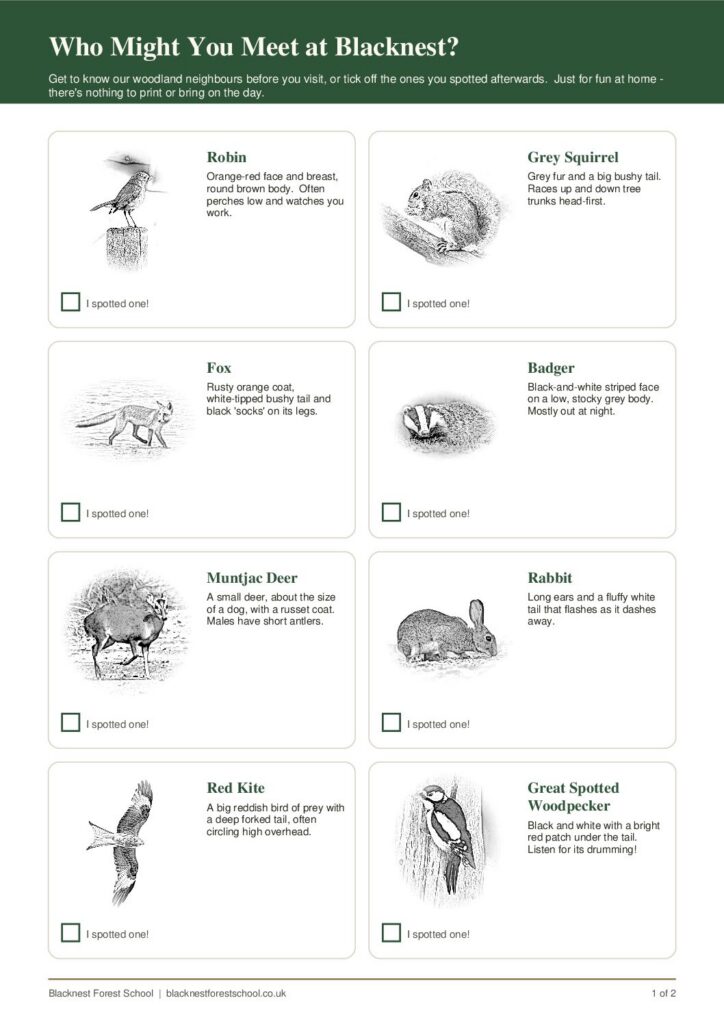
Download (PDF, 2 pages)
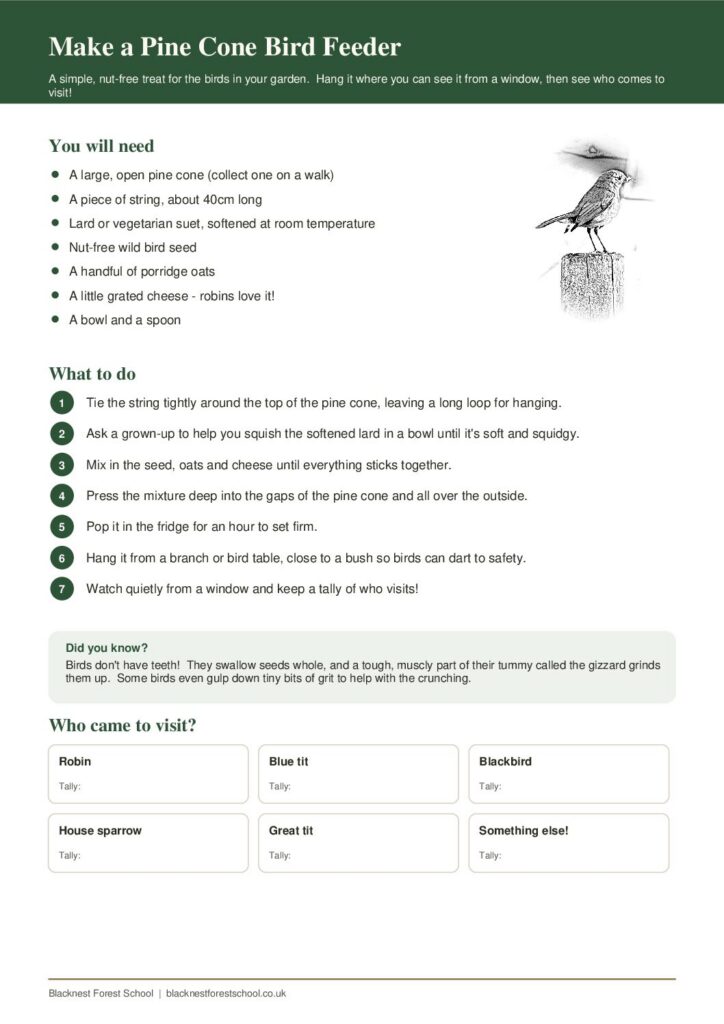
Download (PDF, 1 page)
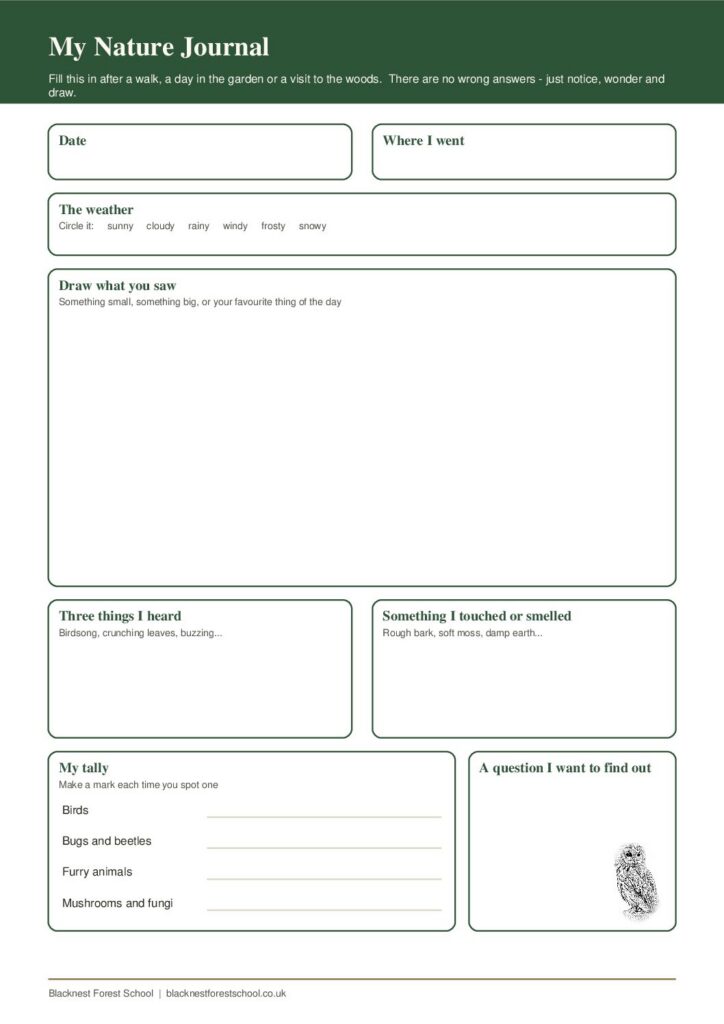
Download (PDF, 1 page)
Recent Comments